Aimen Tariq
Independent neuroscience researcher
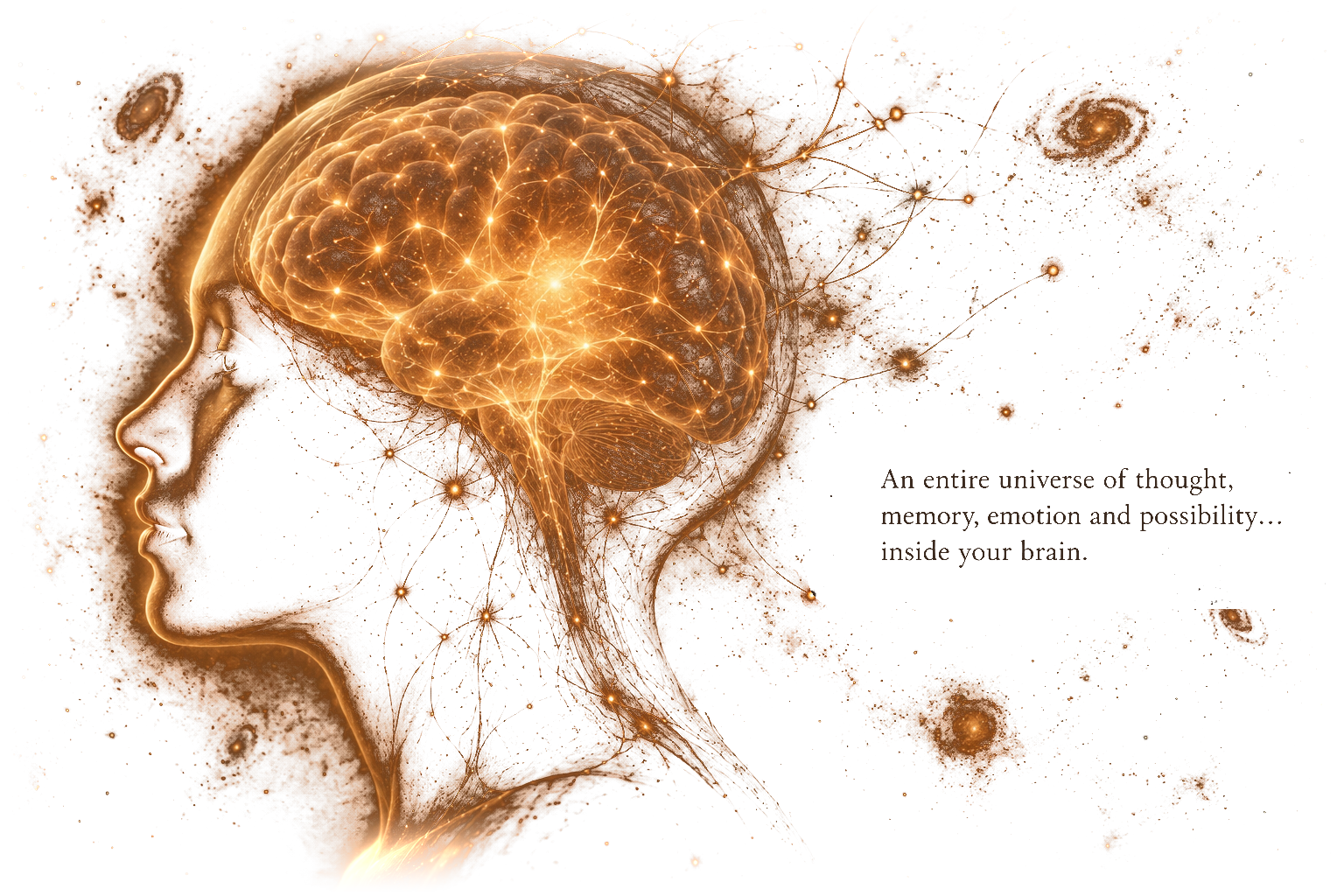
How does the developing brain become a functional mind?
I am interested in how biological organization during development gives rise to functional neural systems—from neural cells and tissues to circuits, computation, and cognition.
My current work focuses on early human neurodevelopment and the computational study of developmental organization using publicly available biological data.
Independent research · Developmental neuroscience · Computational neuroscience
Research question
How does biological organization become neural function?
The adult brain is the product of developmental processes that unfold long before mature neural circuits emerge. I am interested in how neural cells acquire identity, organize in space, form circuits, and ultimately support neural computation.
01 — Development
How are neural cell populations specified across early human development?
02 — Organization
How do cellular states become spatially organized into developing brain regions?
03 — Trajectories
Can developmental transitions be computationally reconstructed from heterogeneous biological datasets?
04 — Circuits
How does developmental organization constrain later circuit formation?
05 — Cognition
How does organized neural circuitry become capable of perception, learning, memory, and thought?
Current investigation
Early human neurodevelopment
My current work focuses on how neural cells are generated, acquire distinct identities, and become organized into specific regions of the developing human brain — studied computationally, using publicly available biological data.
Developmental Brain Map
A computational prototype for representing changes in cellular identity, developmental state, and spatial organization across early human brain development.
Cell population
Region
Conceptual developmental map
Simulated dataComposition → distribution → organization. Schematic only; not anatomically accurate.
Developmental trajectory — Neural progenitors
Illustrative data — not an experimental result
Population
Simulated- Population
- Neural progenitors
- Developmental stage
- Early
- Spatial distribution
- Dense, lining the ventricular surface
- Developmental state
- Proliferating
Biological data
- Cell population
- Neural progenitors
- Developmental state
- Proliferating
- Spatial location
- Ventricular zone
- Data type
- Single-cell / spatial
- Source
- Illustrative biological state — no dataset connected
The current visualization uses simulated data to demonstrate the computational representation. It is not a fetal brain atlas and does not represent an experimental finding.
Developmental framework
Developmental biology builds upward toward neural function.
01
Neural cell generation
02
Cell differentiation
03
Cell-type composition
04
Spatial organization
05
Early brain structure
06
Circuit formation
07
Neural function
Proposed computational framework
Linking cellular state, space, and time
- Developmental stage
- Cell type
- Molecular state
- Spatial organization
- Brain region
- Developmental trajectory
The framework is designed to integrate complementary descriptions of human neurodevelopment and investigate how cellular states, developmental transitions, and spatial organization relate across time.
Initial analyses will focus on publicly available developmental datasets, with the goal of asking a narrow, testable question before expanding across modalities.
Computational approach
The research framework focuses on characterizing developmental cell states, investigating developmental trajectories, and exploring methods for linking cellular states to spatial organization.
Machine-learning methods will be evaluated where they provide a meaningful advantage over established computational approaches.
Datasets under consideration
None is currently integrated into an analysis.
- Initial
- scRNA-seq · snRNA-seq
- Spatial
- Spatial transcriptomics · developmental brain atlases
- Later
- Fetal neuroimaging
04 — Developmental trajectories
How does developmental organization contribute to the formation of functional neural circuitry?
The next question is how changes in cellular organization become changes in neural computation.
- 01Cellular development
- 02Tissue organization
- 03Circuit formation
- 04Neural activity
05 — Longer-term research direction
From developmental organization to cognition
How does the organization established during development constrain the circuits that later support perception, learning, memory, and thought?
- 01Developmental organization
- 02Circuit maturation
- 03Neural activity
- 04Computation
- 05Perception
- 06Learning
- 07Memory
- 08Cognition
A developmental view of neuroscience
The adult brain is not the starting point. Its functional architecture is progressively constructed through developmental processes operating across cells, tissues, circuits, and time.
Understanding neural function therefore requires asking not only what the mature brain does, but how its organization emerged.
Current research stage
- Research question defined
- Developmental framework established
- Literature under investigation
- Public datasets being evaluated
- Computational framework under development
- Next: First reproducible analysis of a defined developmental transition.
Research note 001 · Independent research note · 2026
Toward a Computational Reconstruction of Early Human Neurodevelopment
- Question
- How are neural cell populations specified, differentiated, and spatially organized during early human brain development, and can their trajectories be reconstructed computationally?
- Background
- During early development, progenitor cells acquire distinct fates under molecular programs, differentiate into neuronal and glial populations, and migrate into organized tissue that forms the scaffold for later circuits.
- Gap
- Cellular state, developmental time, and spatial organization are often described separately; how they relate across stages remains an open computational question.
- Hypothesis
- Developmental transitions inferred from cellular state may be partially linked to spatial organization when datasets are integrated carefully across stages.
- Data
- Under consideration: publicly available single-cell and single-nucleus transcriptomic data, spatial transcriptomics, developmental brain atlases, and fetal neuroimaging.
- Method
- Integrate datasets across developmental stages, identify cell states, and explore trajectory inference and spatial mapping methods.
- Results
- Current status: methodological framework and dataset selection.
- Limitations
- Computationally inferred developmental trajectories are hypotheses, not direct observations of developmental processes. Conclusions depend on dataset quality, sampling, developmental stage, and computational assumptions and require biological validation.
- Next analysis
- Select an initial dataset and define a narrow, tractable analysis of one developmental transition.
Limitations
Computationally inferred developmental trajectories are hypotheses, not direct observations of developmental processes. Conclusions depend on dataset quality, sampling, developmental stage, and computational assumptions and require biological validation.
Open questions
- Q1Which developmental windows are best represented in available datasets?
- Q2How reliably can spatial organization be linked to single-cell states across datasets?
- Q3Can developmental trajectories inferred from heterogeneous datasets recover biologically meaningful transitions rather than artifacts of sampling and technology?
Next
Select one publicly available human developmental dataset and reproduce a well-defined developmental transition as the first test of the computational framework.
About
Aimen Tariq
Aimen Tariq is an independent neuroscience researcher interested in how biological organization during development gives rise to functional neural systems.
Her current work focuses on early human neurodevelopment, with particular interest in neural cell specification, cellular differentiation, spatial organization, and developmental trajectories.
She is developing computational approaches for working with publicly available developmental datasets and using them to formulate tractable questions about how the developing brain becomes organized.
Her longer-term interest is the transition from cellular organization → neural circuits → computation → cognition: how does the physical brain acquire the organization necessary for perception, learning, memory, and thought?
References
Primary literature and public datasets will be documented here as analyses are added.